Most falls at home happen on familiar ground, doing ordinary things. The good news is that the changes that help most are cheap, quick and easy to undo.
Hallways and stairs
- Remove loose rugs and trailing cables rather than taping them down
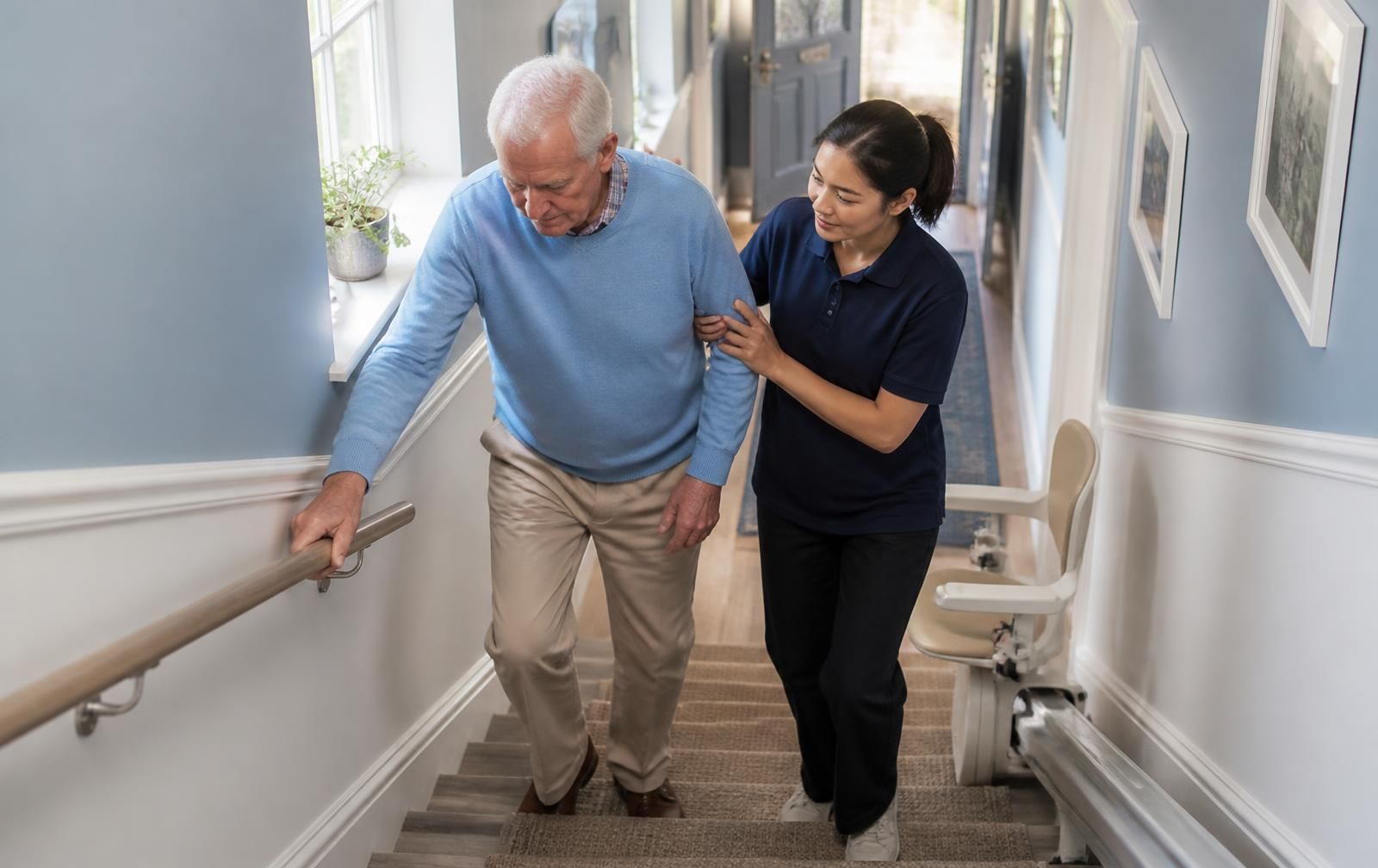
- Add a second stair rail if only one side has one
- Fit brighter bulbs and a plug-in night light on the route to the bathroom
- Keep a charged phone or pendant alarm within reach of the chair and bed
Bathroom
This is where most support is needed and where most injuries happen. Grab rails beside the toilet and in the shower, a non-slip mat, a shower seat and a raised toilet seat change what someone can manage alone.
Bedroom and living room
Raise a low chair or bed so standing is easier, clear a wide path to the door, and keep glasses, water, medication and a lamp on the same side each night.
Kitchen
Move everyday crockery to waist height, swap a heavy kettle for a small one or a hot water dispenser, and set an automatic cut-off plug if the hob is a worry.
What to arrange through the council
Local authority occupational therapists can assess for rails, ramps, key safes and larger adaptations, often at no cost. An occupational therapy referral is worth requesting early, since waiting lists are common.
A key safe and better lighting prevent more problems than any single piece of equipment.
The Premald Care Team
Care coordinators, Brentwood & Manchester
Our coordinators and senior carers write together, drawing on daily visits, assessments and the questions families ask us most.